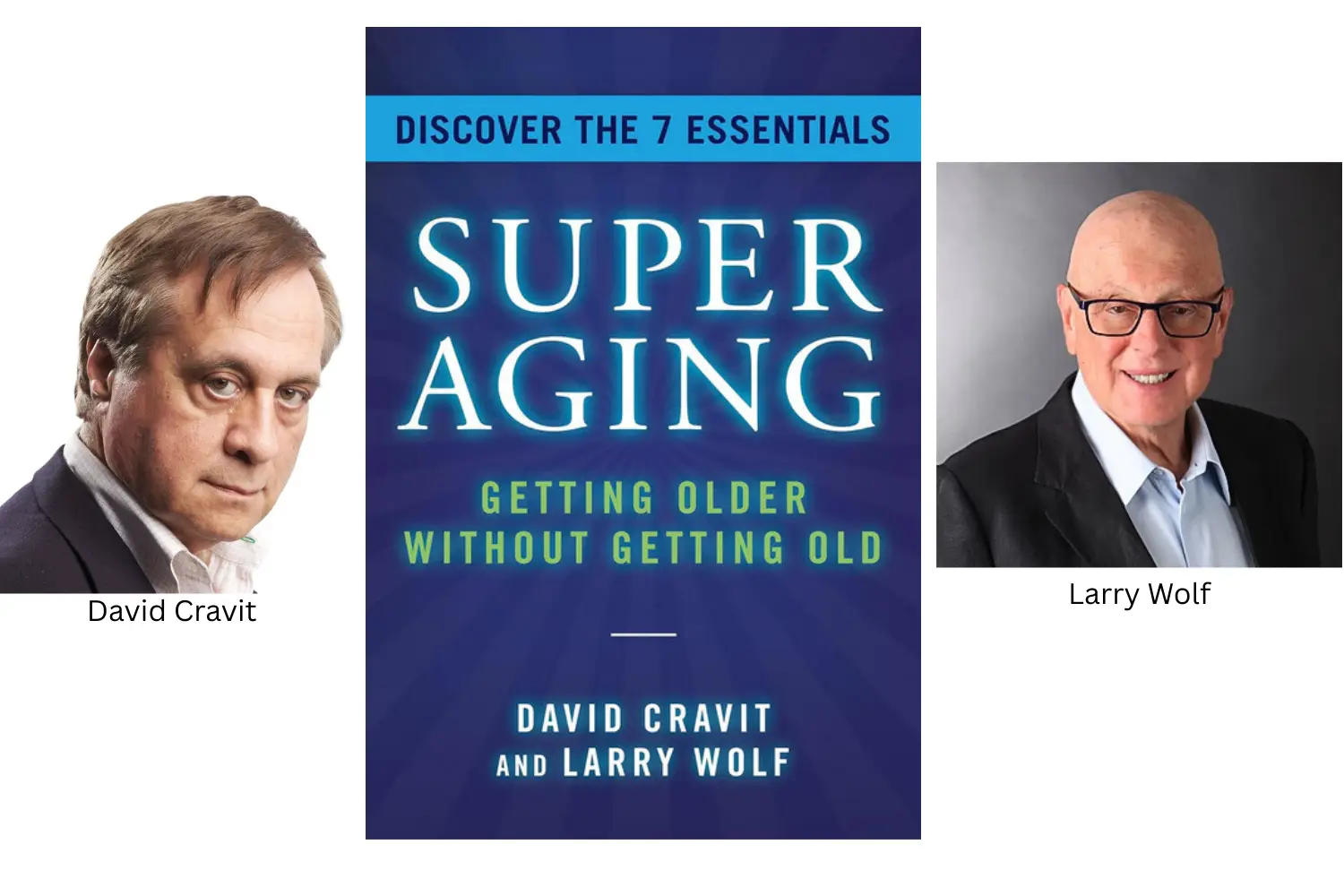
After spending decades in advertising and marketing, David Cravit and Larry Wolf reached a point in life when most people their age were starting to slow down.
But, instead of easing into retirement, the two men made a conscious decision to do something radically different. They teamed up to help rebrand aging itself.
They launched a new platform called SuperAging. It includes a book, a workbook and a website designed to help people over 50 live longer, healthier and more purpose-driven lives.
Rather than accept society’s expectations for what aging looks like, David and Larry are proving that life after 50 can be more vibrant and fulfilling than ever before.
“We came at this from a marketing perspective,” David said. “We noticed that while there was a behavioral shift in how baby boomers viewed aging, there was also a growing wave of science and technology offering ways to extend not just lifespan, but health span.”
That shift became personal for both men. David had already written two books about the changing behavior of baby boomers. Larry, whose background is in branding and new product development, saw a rare opportunity.
“There was an opportunity to positively brand aging,” Larry explained. “We didn’t want to just accept the default aging attitude. So we created SuperAging as a way to encourage people to think differently and act differently, no matter their age.”
The seven A’s of SuperAging
The concept of SuperAging is built around what David and Larry call the Seven A’s. These pillars serve as a framework for people who want to live fully and stay active well into their later years. They are:
- Attitude
- Awareness
- Activity
- Achievement
- Attachment
- Autonomy
- Avoidance
“The first and most important A is attitude,” Larry said. “If you believe you can age well and have a fulfilling life, you’re already halfway there. With the right mindset, almost anything is possible.”
David agreed, pointing to research that shows a strong correlation between optimism and longevity. He explained that a positive attitude leads to lower stress, which reduces inflammation in the body. Inflammation is the root cause of many age-related illnesses, so maintaining a healthy mindset is more than just motivational thinking.
Awareness is about staying informed about new research, health advancements and lifestyle changes is essential for thriving in later life. David and Larry created SuperAging News as a way to curate trustworthy content and make it easier for readers to stay current.
With activity, David and Larry stress the importance of physical movement and mental engagement. They say it doesn’t have to be intense or time-consuming. Even brief “exercise snacks” throughout the day can improve blood pressure and longevity.
Larry recently took up tai chi swordsmanship, not because he expects to master it, but because it challenges his mind in new ways. Learning something difficult and unfamiliar is just as important as staying physically active, he said.
Achievement means having goals and purpose. Whether through work, volunteering or creative pursuits, having purpose adds structure and meaning to life.
“Achievement isn’t just about climbing corporate ladders,” Larry said. “It’s about doing things that matter to you and that bring joy to your life.”
Connection and contribution
Attachment refers to relationships and community. Larry has been married to the same woman for 60 years and believes that deep, ongoing connections are key to emotional health and longevity.
“People need people as much as they need food,” Larry said. “Loneliness is deadly. You need real, face-to-face interaction instead of just online conversations.”
David acknowledged the dangers of social isolation, especially among older adults. But he also sees potential in how technology can bridge some of those gaps. He pointed to emerging tools such as AI avatars and social robots that can offer companionship and reduce stress for people who are alone.
Autonomy zeros in on maintaining physical, mental and financial independence because it is vital for confidence and quality of life. David and Larry are excited by the explosion of age-related technology that is helping people live safely and independently in their 70s, 80s and beyond.
Avoidance includes recognizing and avoiding scams, misinformation and ageist attitudes that try to marginalize older people.
“We’re surrounded by content that’s either misleading or dangerous,” David said. “You have to question where it came from, and check who is behind it.”
Learning new things keeps you young
David and Larry are strong advocates for novelty and mental stimulation. The brain, they argue, thrives when exposed to new experiences and challenges. Learning a language, picking up an instrument, or even trying a new recipe can build new cognitive pathways.
“Your brain craves novelty,” David said. “Doing something unfamiliar strengthens mental flexibility and protects against decline.”
They cited a study in which older adults took Spanish lessons for 20 weeks. Even though few became fluent, the act of learning something new improved their cognitive test scores. Larry believes curiosity is essential to mental vitality, and he continues to try new things just for the fun of it.
Travel is another area they see as mentally enriching. Whether it’s solo travel, multi-generational trips or skip-gen travel, where grandparents travel with grandchildren, new experiences often lead to growth, bonding and renewed energy.
The gift of longevity
David and Larry are part of a growing movement that believes longevity should be seen as a gift, not a burden. People today are living longer than ever before. The old narrative of slowing down at 65 no longer fits.
“There are more than 100,000 centenarians in the U.S. today,” David said. “The idea of coasting into the sunset is outdated. If you have 30 or 40 more years left, the question becomes, what are you going to do with them?”
Larry encourages people to explore new interests, even if they feel unsure where to begin. “Sit down and ask yourself what brings you joy,” he said. “Then take a step in that direction.”
A personal sense of purpose
After building successful careers, David and Larry now find deep purpose in their work with SuperAging. For David, the meaning comes from making complex, science-based information accessible to everyday people. He said it is incredibly rewarding to help others feel excited about their future.
For Larry, it is about helping others live with curiosity, dignity and connection. He enjoys being part of a movement that empowers people to live intentionally and stay engaged with the world around them.
“I’m a very lucky guy,” Larry said. “I have a wonderful wife, great kids and grandkids. Life is good, and I want to help others feel the same way.”
Both men agree that their mission now is to help others break free from outdated beliefs about aging. They want people over 50 to realize they still have a lot to give, experience and enjoy.
An invitation to reflect and act
To help people apply the Seven A’s in their own lives, David and Larry created the SuperAging Workbook. It includes quizzes, exercises and reflection tools designed to help people explore what brings them meaning and how to live more intentionally.
“The workbook moves beyond theory,” Larry said. “It gives people simple, practical steps to start building the life they want.”
They also emphasize the power of small habits, such as journaling, gratitude and spending time outdoors. These practices have been shown to reduce stress and improve both mood and cognitive health.
“There are so many small things people can do,” David said. “Even something as simple as reducing how long you sit each day can have an impact.”
The men encourage others over 50 is to stay curious, stay connected and keep moving toward something meaningful.
For more information
People can connect with David and Larry on these platforms:
- Website = www.superagingnews.com, where people can subscribe to their free newsletter
- Facebook = www.facebook.com/superaging.book
- Instagram = www.instagram.com/super.aging
- X = www.x.com/SuperAgingInfo
- YouTube = www.youtube.com/@Superagingnow
- LinkedIn = www.linkedin.com/company/90582394
People can listen to the SuperAging Podcast on Spotify, iTunes and other sites. Their workbook, “SuperAging: Getting Older Without Getting Old,” is available on Amazon and in other bookstores.
If you order David and Larry’s book from a link above, Forward From 50 may receive a small commission at no extra cost to you.