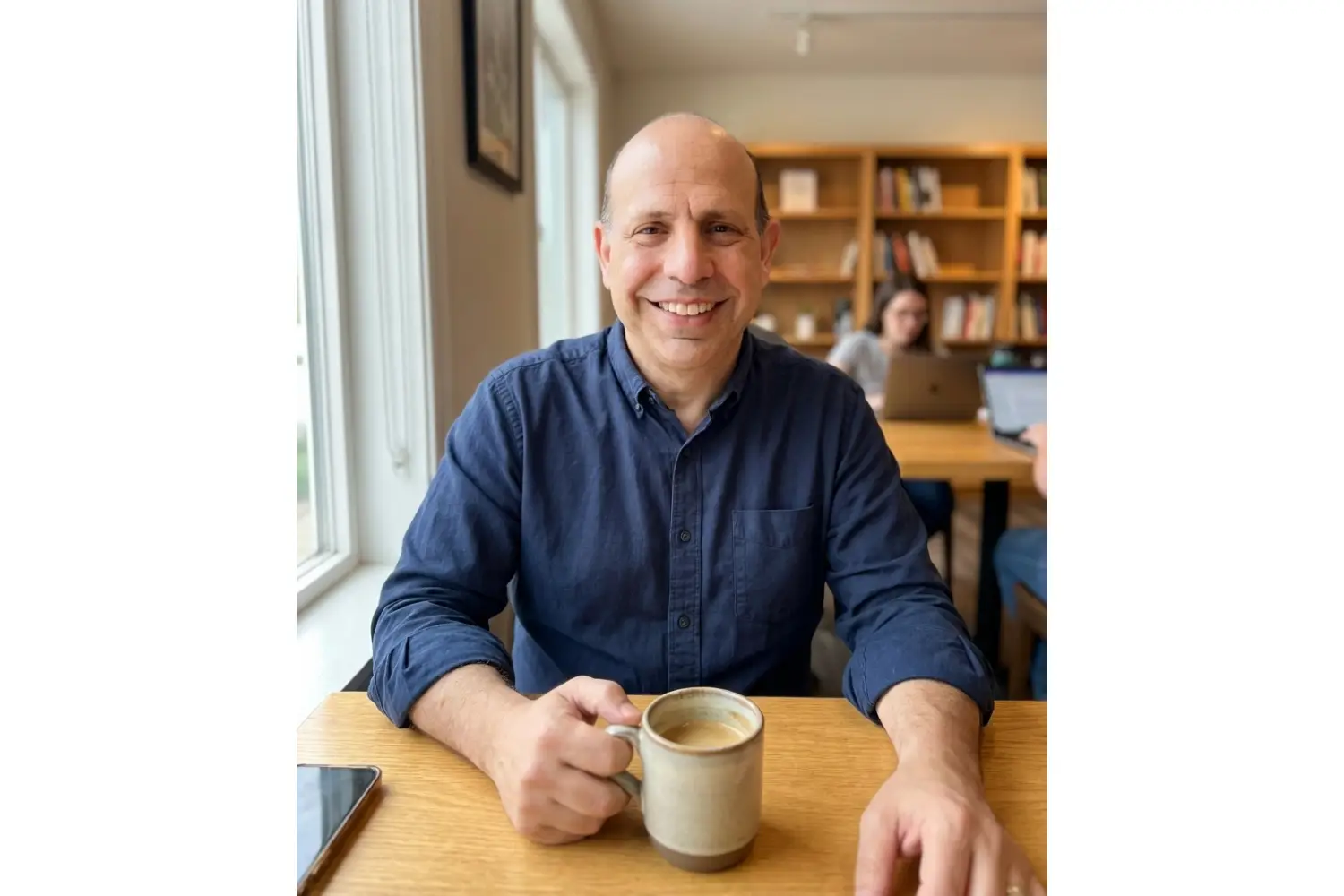
At 56, Evan Sanchez talks a lot about alignment, such as what it feels like to have it, what it costs to lose it and why rediscovering it later in life has become the driving force behind his work.
His journey has been anything but linear. Cancer, bankruptcy, layoffs and burnout all left their marks. Yet, each setback nudged him closer to the work that now gives his life meaning.
Today, Evan helps young adults and their parents navigate the messy, confusing transition into adulthood, and he does so with clarity, confidence and compassion.
“I’ve been in and out of alignment my whole life,” Evan said. “I remember what it felt like to be in alignment, and I remember what it felt like not to be.”
That contrast between purpose and drift as well as authenticity and expectation worked to shape his own story. Today, it fuels Evan’s mission to help others avoid the painful detours he once endured.
A purpose born of pain
Evan’s desire to guide young adults didn’t come from theory, but rather from lived experience.
“I’ve survived cancer and bankruptcy, and I’ve been laid off more times than I can count,” he said. “There were all these times where I just wasn’t being true to myself.”
He remembers the confusion of early adulthood vividly. The pressure to choose the “right” career. The fear of disappointing parents. The uncertainty about what he actually wanted.
“When you’re graduating from college and in your 20s, it’s really messy,” he said. “It’s really hard to trust your intuition.”
He sees that same struggle today, but amplified.
“The paths were more clear cut when we were young,” he explained. “Now the paths are all over the place. The economy’s not great and artificial intelligence is expanding. How do you know what to do when you get out of college if you haven’t been passionate about something your whole life?”
Evan doesn’t want young adults to repeat his mistakes and feel the same regrets when they get to his age.
The quarter-life crisis
One of the biggest surprises in Evan’s coaching work is how often parents and their adult children seek advice.
“Parents give advice that’s well intended, but it lands wrong,” he said. “And when you’re in your 20s, everything feels heavier. So that advice feels like judgment and shame.”
He sees parents struggling with watching their children enter adulthood without the stability they once took for granted in their own lives.
“Parents want their kids to be career independent. They also want them to have income, purpose and the ability to live on their own,” he said. “But, all the parenting manuals are geared toward younger kids, not older ones.”
That gap creates tension, frustration and miscommunication. Evan teaches parents a different approach rooted in empathy, curiosity and validation, rather than instruction.
“You cannot give advice,” he said. “That’s one of the hardest things I have to tell parents. You’ve had years of training. You’re a black belt in giving advice. But, now you have to stop.”
Instead, he teaches them to acknowledge and validate what their young adult is feeling.
“If they say, ‘I’m scared to go into a crowded room and network,’ you say, ‘It sounds like you’re really scared about going into these rooms,’” Evan explained. “You are just repeating what they said. But, in that moment, they feel seen and heard.
“That simple shift can change everything,” he added. “When you’re seen and heard, you grow.”
Discovering a new calling through coaching
Evan didn’t set out to become a life coach. His early career was in the music industry where a dream job took him to Atlantic Records in the 1990s.
“It was really exciting. I worked with bands like Matchbox 20,” he said. “I felt as though I was in alignment during that time.”
But, after burnout crept in, Evan pivoted to advertising and found success, then lost it through layoffs. He tried new things, returned to old ones, and kept searching for the spark he once felt. He finally stumbled on it through coaching others.
“Once I found out that I could coach people and I got certified as a life coach, I realized this lights me up more than anything I’ve ever done,” Evan explained. “Changing people’s lives and making an impact is what gives me purpose.”
The training was intense. It involved nine months of coursework, practice sessions, being coached himself and learning the psychology behind human behavior.
“It felt like I was drinking through a fire hose,” he said. “But, it gave me tools I wished I had decades earlier.”
One of the most transformative concepts he learned was GAIL, which stands for Gremlins, Assumptions, Interpretations and Limiting Beliefs.
“These are the four things which hold people back,” said Evan. “When I’m coaching someone, I’m looking for what’s underneath what they’re telling me.”
Helping clients uncover those hidden barriers is where the breakthroughs happen.
“Nine times out of 10, someone learns something about themselves they didn’t know,” he said. “Those ‘aha’ moments are amazing.”
Helping young adults find their path
Evan believes every young adult already has the answers they’re searching for, but they often need help uncovering them.
“Their heart and mind really know what to do,” he said. “My job is not to direct them, but to help them figure out what’s underneath.”
He encourages what he calls “messy action,” especially when people are in their 20s.
“That’s the best time to try things because you find out what excites you and what drains you,” Evan explained. “It’s like sampling ice cream. How are you supposed to know what flavor you like unless you try some?
“I tell my clients, if you want to be a dog trainer or an entrepreneur, then try it. That’s how you learn,” he added.
He sees young men struggling the most because they often mature later.
“Women are more in touch with their emotions and intuition. However, men feel a lot of pressure to be successful and to be providers,” Evan said. “When they don’t see a straight path, they often feel like failures.”
Coaching men and women help them to reframe those beliefs, understand their strengths and build confidence in their own direction.
Helping parents provide better support
Parents often come to Evan feeling helpless, frustrated or scared. They want to help, but don’t know how. So, Evan gives them tools that work not just with their kids, but in every relationship.
One of his favorites is a simple question: Do you want to be helped, heard or hugged?
“I love that phrase,” he said. “It saves so much time and energy. And it doesn’t come off as offensive. It just clarifies what the other person needs.”
He also teaches parents to ask “what” and “how” questions instead of yes-or-no ones.
“If someone says they want to be an acrobat, you say, ‘What would that look like? What would you have to do to get there?’” he explained. “Then they come up with a plan, and people usually follow their own plans.”
Living in alignment after 50
Coaching isn’t just Evan’s profession, rather it’s his purpose. Best of all, it is work that finally feels aligned with who he is and what he values.
“I see people I have coached breaking through barriers that were entrenched for years,” he said. “That lights me up.”
He’s also rediscovering old passions, like music and swimming, and giving himself permission to explore new ones. That mindset involving curiosity, experimentation and alignment is what he hopes to pass on to others.
“I want people to reach their highest potential,” he said. “And I want young adults to avoid the regrets I had. That’s what gives my life meaning now.”
For more information
People can connect with Evan on these platforms:
- Website = www.newgradlaunchpadcoaching.com
- LinkedIn = www.linkedin.com/in/evanssanchez
- Instagram = www.instagram.com/newgradlaunchpadcoaching
- YouTube = www.youtube.com/@NewGradLaunchPad