When the idea of living with purpose after 50 comes up, many seasoned citizens instinctively push back because it sounds like a suggestion to reenter the workforce or take on another career at a stage of life when they have already spent decades doing exactly that.
“I’ve already had a job,” they might say. “I’m not looking for another one.”
That response is understandable, especially in a culture that has long equated purpose with productivity, achievement and financial success. But, it is also based on a narrow definition that no longer serves people in the second half of life.
Purpose is not a job, and in truth, it never was.
To fully appreciate what it means to live well after 50, it helps to understand the difference between meaning and purpose. While the two are closely connected, they are not the same. Yet, both play an essential role in creating a life that feels rich, intentional and fulfilling.
What does “meaning” really mean?
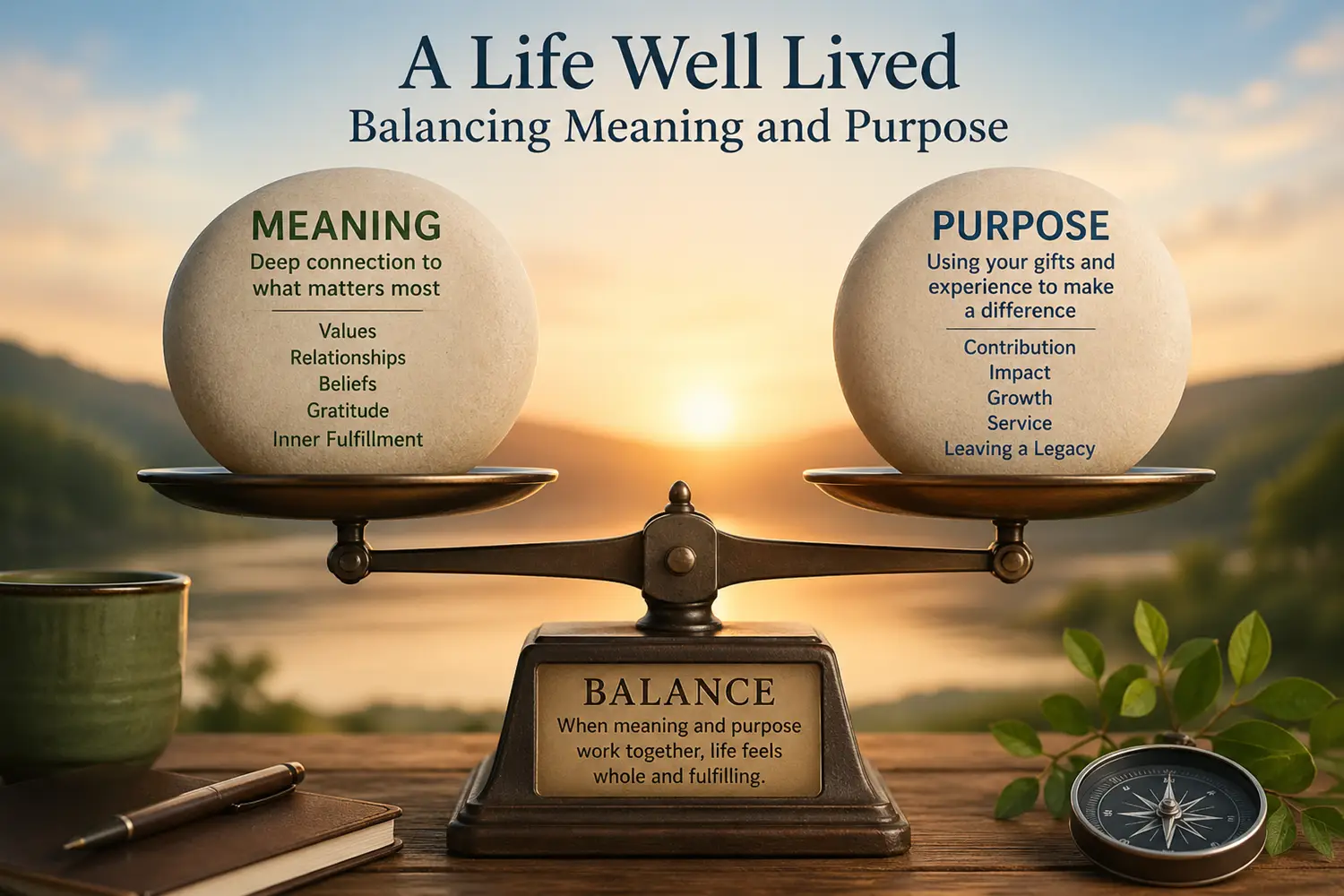
Meaning is deeply personal and largely internal. It answers the question of why your life matters and what gives it value beyond the visible markers of success.
It is shaped by your relationships, beliefs, experiences and the moments that have stayed with you over time.
Meaning can be found in the sense of connection you feel when sitting with family around the dinner table. It is also the peace that comes from living in alignment with your faith or values.
Unlike purpose, meaning is not something that must be pursued or achieved. Rather, it is something recognized and embraced which often becomes more clear with age.
For many people over 50, meaning becomes more accessible because life has provided enough experiences, whether joyful and challenging, to clarify what truly matters and what can be left behind.
However, even a life rich in meaning can feel incomplete without something that calls you to engage with the world beyond yourself.
What does “purpose” really mean?
By contrast, purpose is outward-facing and action-oriented. It answers the question of why you are still here and how you can contribute in ways that extend beyond your own experience.
Purpose is not defined by a job title, paycheck or a formal role. It is defined by the ways you choose to invest your time, energy and accumulated wisdom into something that benefits others or adds value to the world around you.
For some, purpose might take the form of mentoring younger people who are navigating challenges you have already faced. For others, it could involve volunteering for causes that resonate deeply with their values or passions.
It might also appear in more personal ways, such as caring for a loved one, supporting family members, or even pursuing creative or entrepreneurial endeavors that bring joy and a sense of contribution.
The key distinction is that purpose is not about employment, but about engagement. Purpose does not require a formal structure to be meaningful or impactful.
What it does require, however, is a willingness to move beyond passive living and to remain actively involved in something that feels worthwhile.
Why people over 50 need both?
Meaning and purpose are most powerful when they work together, each reinforcing the other in ways that create stability and direction.
A life filled with meaning, yet lacking purpose, can become comfortable, but stagnant. It’s where appreciation exists, but forward momentum begins to fade and days can feel repetitive or unstructured.
On the other hand, a life driven by purpose without a strong sense of meaning can become busy, but unfulfilling, as activity alone does not guarantee a sense of connection or significance.
The balance between the two allows individuals to understand what matters most to them so they can act on those priorities in ways that bring those values to life.
Meaning provides the foundation by clarifying what is important. On the other hand, purpose builds upon that foundation by creating opportunities to express priorities through action and contribution.
Part Two will talk about why both meaning and purpose matter even more once you turn 50.