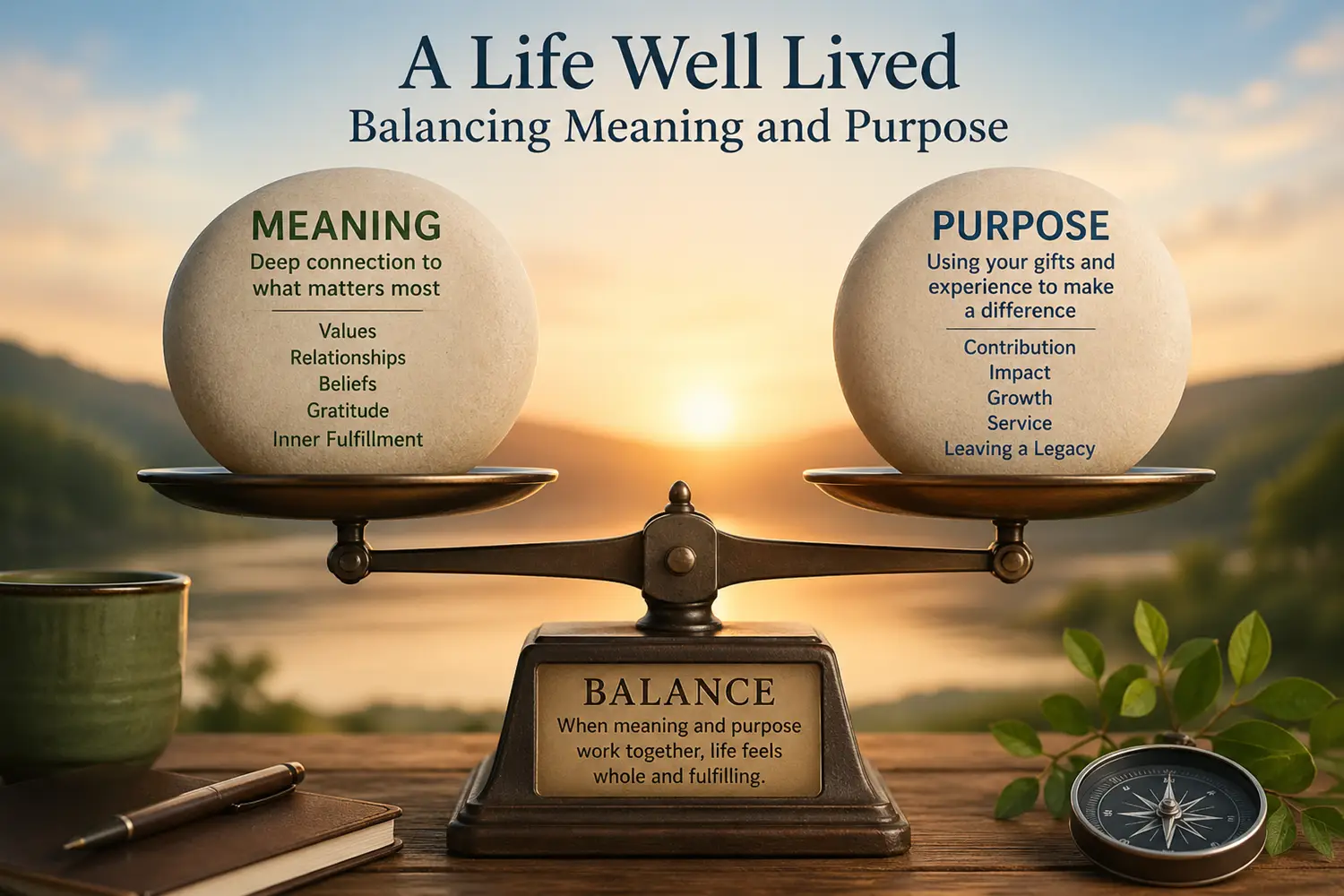
Part One explored the definitions of meaning and purpose as well as why seasoned citizens need both to truly enjoy a fulfilling second half of life.
Meaning and purpose matter more after 50
Earlier in life, purpose is often closely tied to clearly defined roles such as career advancement, raising children or achieving financial stability, all of which provide built-in direction and motivation.
As those roles evolve or diminish, individuals are left with greater freedom as well as greater responsibility to define how they want to spend their time and energy.
For some, this transition is liberating because it offers opportunities to pursue long-delayed interests or to focus on relationships and experiences that were previously sidelined.
For others, the transition can feel disorienting, especially if much of their identity was connected to roles that are no longer as central as they once were.
Those moments of questioning, such as wondering what comes next or whether there is still more to contribute, are not signs of failure, but indications your desire for meaning and purpose remains strong.
How to reconnect meaning and purpose?
Reconnecting meaning to purpose does not require a dramatic life overhaul or a carefully constructed master plan. All it takes is a willingness to reflect honestly and take small, intentional steps in a new direction.
The process often begins by identifying what already brings meaning into your life, including the relationships you value most. It also includes the principles guiding your decisions and experiences that have shaped your perspective.
Purpose often emerges naturally once meaning is put into motion, and it does not need to be large or highly visible to be significant.
Even small actions, when aligned with what matters most, can create a sense of fulfillment that grows over time, When it does, it reinforces the connection between who you are and how you choose to live.
A new way to think about purpose
Rather than viewing purpose as something that must be discovered in a single defining moment, it can be more helpful to see it as something that is continually developed through ongoing choices and actions.
A more useful question than “What should I do next?” might be “Where can I make a difference with what I already have?”
By focusing on the skills, experiences and insights that have been gained over the years, you can begin to see opportunities for contribution that feel natural and meaningful.
Purpose after 50 is less about proving value and more about sharing it. It allows you to give from a place of experience rather than striving for validation.
A life that truly feels complete
If the idea of finding purpose feels like a call to return to work, it may be time to reconsider what purpose really means in this stage of life.
This is not about restarting a career or filling your schedule with obligations. It is about reengaging with life in a way that reflects what matters to you and what you still have to offer.
After 50, meaning and purpose are not only possible, but essential to creating a life that truly feels complete.