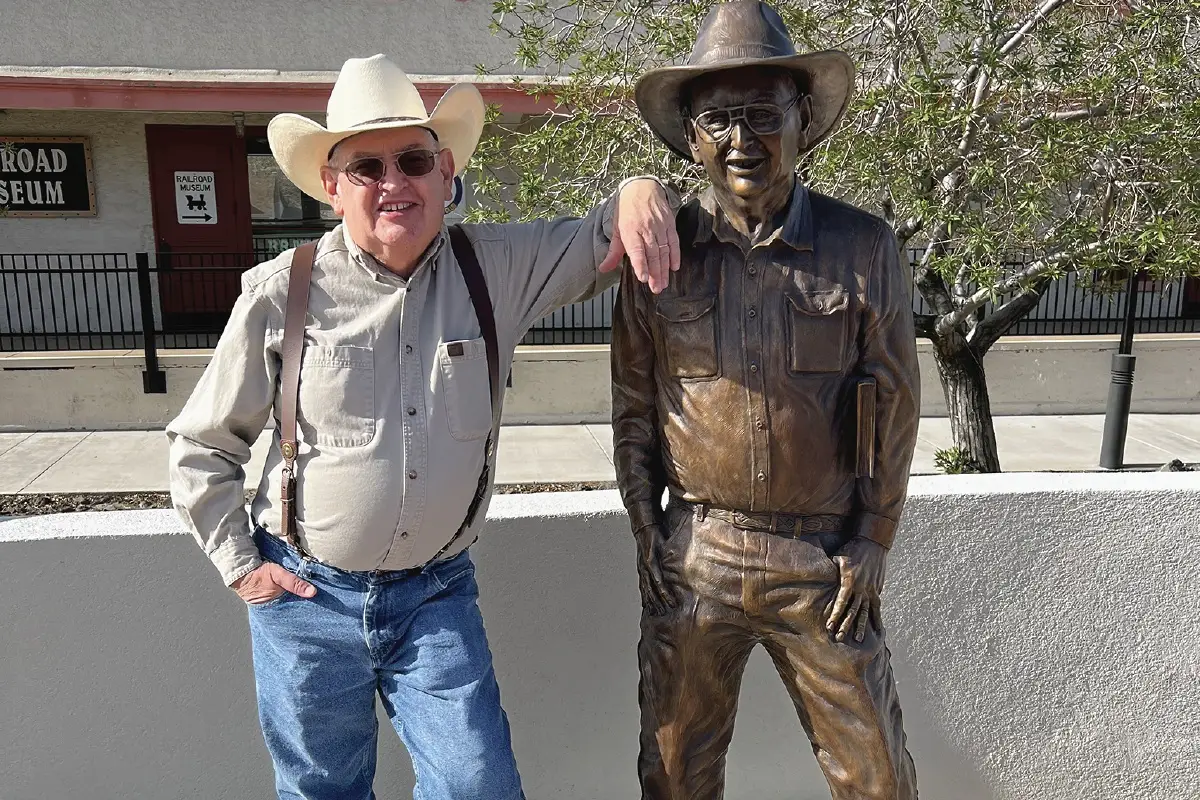
Jim Hinckley spent most of his life with a quiet tug in his chest. It was a pull toward the open road that never fully went away.
He calls it being “born a gypsy.” It was a restlessness that showed up early and resurfaced often. But like many people, he settled into the familiar rhythm of work, family and responsibility. It wasn’t until his mid-50s that he realized the life he was living no longer fit the person he was becoming.
“I developed eye trouble,” Jim explained. “I couldn’t see any reason to put up with my boss’s BS and they couldn’t see any reason to put up with my increasingly poor attitude.”
His wife, Judy, saw something else. She saw a man who loved to travel, loved to tell stories and loved inspiring others to explore. “Let’s do something about it,” she told him.
That simple encouragement became the spark for a new life.
Finding purpose after 50
Jim didn’t set out to reinvent himself. He simply reached a point where the cost of staying the same outweighed the fear of change.
“Life is too short,” he said. “You start realizing that as you hit 50 and then 60. There’s gotta be more to life than just accumulating things and sacrificing too much of your life for that.”
What surprised him most was how natural the shift felt once he stepped into it. The work wasn’t always easy and the income wasn’t always steady, but the meaning was unmistakable.
“It’s been the most rewarding thing I’ve ever done,” he said. “If I have one complaint, it’s that I wish I could figure out how to make a dollar or two more doing it. But the satisfaction is tremendous.”
That satisfaction comes from the people he meets, the relationships he builds and the stories he helps preserve. It comes from hearing that someone took a road trip because of something he wrote or said. It comes from students who tell him he inspired them to see the world differently.
“That’s a feeling you just can’t beat,” he explained.
The road as a classroom
Jim’s work is rooted in travel, but it’s not about checking destinations off a list. It’s about discovering America in all its color and complexity. He encourages people to take the back roads, slow down and talk to strangers in small town cafes.
“It’s about getting out of your bubble and realizing we have more in common than separates us,” he explained.
Route 66 plays a central role in his storytelling. That’s not because it’s the most historic or scenic highway, but because it has become something larger than itself.
“It’s morphed into a living time capsule,” Jim said. “Like Colonial Williamsburg with an overlay of Disneyland.”
When traveling on Route 66 on any given day, you might find yourself talking with an 85‑year‑old farmer and a German motorcycle group in the same diner.
The road has become a crossroads of cultures, memories and dreams. It’s also become a gateway for people rediscovering the joy of travel later in life.
“Route 66 is a catalyst,” Jim said. “It reignites a passion for adventure on the open road.”
A global fascination
Jim still marvels at the worldwide love for Route 66 even though it is a highway that doesn’t officially exist anymore. Yet it draws travelers from every corner of the globe. He remembers speaking at a festival in Europe when a man approached him with a story he never forgot.
The man had grown up behind the Iron Curtain listening to Radio Free America and watching bootleg copies of “Easy Rider.” For him and his generation, Route 66 symbolized freedom.
“He said it represented what the Statue of Liberty meant to a previous generation,” Jim recalled. “That was profound.”
Reinventing through technology
Jim’s platform, Jim Hinckley’s America, didn’t begin as a grand vision. It started as a practical attempt to promote his books. But, as he leaned into storytelling, it grew into a multimedia effort that today includes a podcast, livestreams, speaking engagements and a global audience.
The challenge was learning the technology, but he taught himself how to build a website, produce a podcast and navigate social media.
“I’m basically modern Amish. Anything newer than a Model A Ford and I’m lost,” Jim joked. “Every day is a big learning curve, but the silver lining is you never have to look for an excuse to drink.”
Technology also keeps him relevant, something he thinks about more as he approaches 70.
“There’s a freedom in aging if we allow it,” he explained. “We can accept the limitations and learn to adapt. Or, we can become rigid and locked in. I choose the liberation.”
Sharing America’s story
Jim’s work highlights a wide range of people who contribute to the American narrative. His guests include artists, authors, historians, community leaders and entrepreneurs. He has interviewed mayors, website designers, sculptors and even researchers studying sites from the Green Book.
“I want to share America’s diverse story,” he said. “And inspire road trips by telling people where to go.”
His own writing reflects that same passion. Jim has authored more than 20 books, including histories of the early auto industry, Route 66 encyclopedias and guides to ghost towns. His newest release is “Route 66 Centennial Anthology,” and he’s already planning the next one.
Lessons from forgotten places
Writing about ghost towns and abandoned communities has shaped Jim’s perspective on life.
“It keeps you humble,” he said. “You see these places where people had their dreams wrapped up, and how short that was. It ensures you do not take yourself too seriously.”
He tells the story of Rhyolite, Nev., which went from a tent city to a booming modern town in five years and then was nearly empty five years later.
“It reminds you how quickly things can change,” he said.
The joy of connection
For Jim, the greatest reward of his post‑50 reinvention is the friendships he’s made. He has spoken at private dinners with Nobel Prize winners, paleontologists and military leaders. He has stayed in castles, traveled internationally and met people from backgrounds he never imagined.
One of his favorite stories involves the honorary mayor of Oatman, Ariz., a donkey named Walter who has more than 200,000 followers on Facebook. Jim posed for a photo with Walter during a book signing and later discovered the donkey’s online popularity far exceeded his own.
“That’s humbling,” he said. “I guess I’m just not a big enough ass.”
Giving back through community
Jim believes revitalizing communities begins with building partnerships and fostering a sense of shared purpose. He encourages older adults to use their experience to help others. He sees this as an essential role for people over 50.
“Reach out to your community college. Share your expertise. Teach history. Teach cooking. Whatever it is, you can pull people together,” Jim explained. “We have so much to offer that we can become mentors for another generation.”
Looking ahead
As the Route 66 centennial approaches, Jim is already thinking beyond it. He wants to help preserve the road’s history and ensure its stories continue for future generations.
He’s also considering a new podcast aimed at seasoned citizens, focusing on relevance, reinvention and supplemental income in later life.
“We can use our travel and our experiences to help others explore possibilities, too,” said Jim.
For more information
People can connect with Jim on a variety of platforms, including:
- Website = www.jimhinckleysamerica.com
- Facebook = www.facebook.com/jimhinckleysamerica
- Instagram = www.instagram.com/jimhinckley
- LinkedIn = www.linkedin.com/today/author/jameshinckley
The “Coffee with Jim” podcast can be found on iTunes, Spotify and several other distribution sites.
Jim has multiple books available on Amazon, including his most recent one titled “Route 66: 100 Years of America’s Mother Road.”
If you order a book from a link above, Forward From 50 may receive a small commission at no extra cost to you.