For much of his life, Adam Nemer believed success meant pushing through pain.
He built an impressive career in healthcare leadership, managed large teams and accepted increasing levels of responsibility. From the outside, he appeared to be thriving.
However, inside he was carrying emotional burdens that affected nearly every aspect of his life.
Today, Adam’s definition of success looks very different.
“I’ve never worked harder in my life and never made this little money, but I’ve never been this happy either,” he explained.
That happiness did not come from a promotion, a larger paycheck or another professional achievement. It came from discovering a mission that gives his life meaning and purpose after turning 50.
Understanding mental health
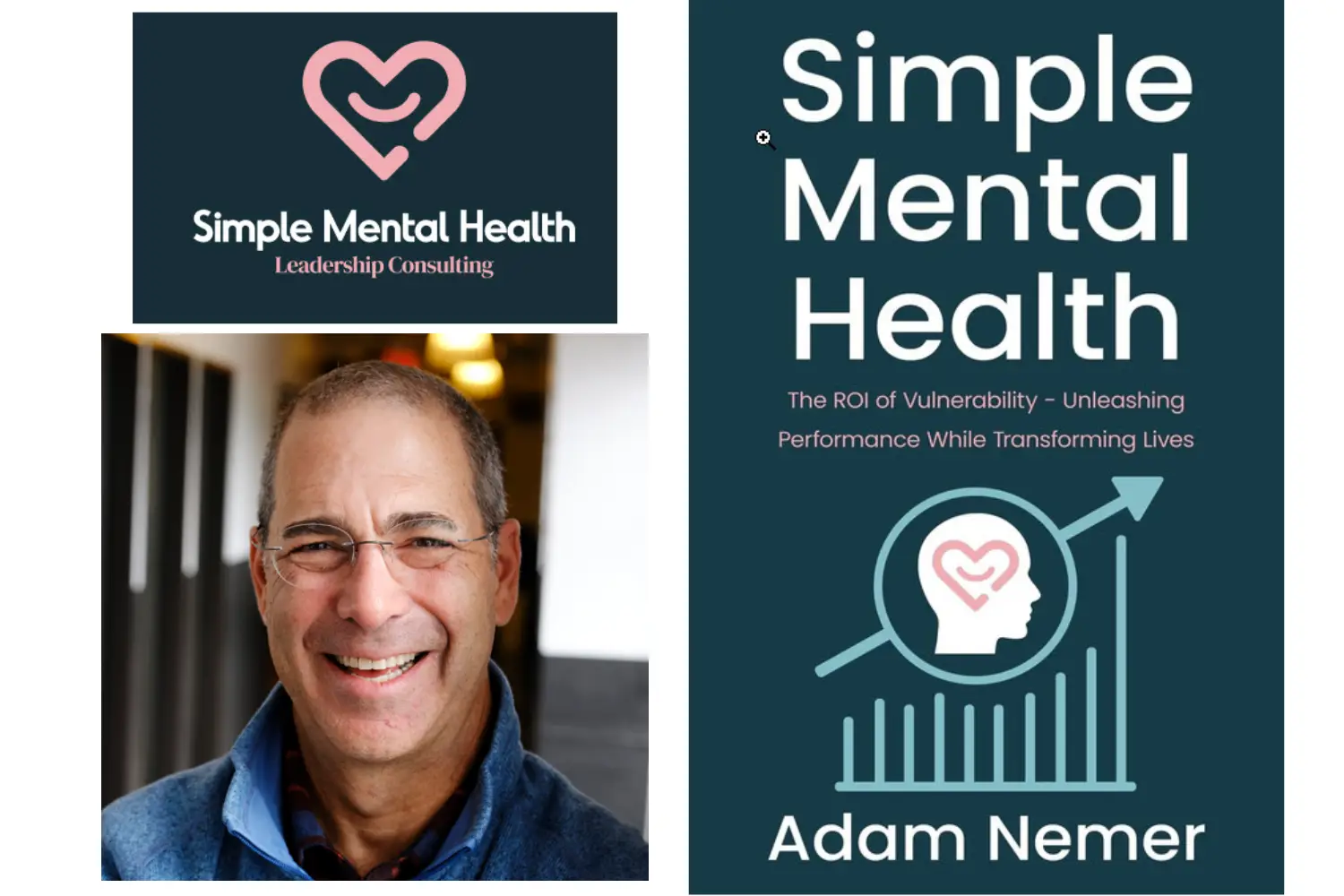
Adam now spends his days helping organizations and individuals to better understand mental health. Through his company, Simple Mental Health, he teaches leaders how to recognize when people are struggling, reduce stigma and create workplaces where people feel safe seeking help.
The work is deeply personal because it grew out of his own journey. For years, Adam struggled with anxiety, depression and unresolved grief after discovering the bodies of his deceased parents.
Like many people in his generation, he learned to keep difficult emotions hidden. He focused on work, family responsibilities and achievement while quietly carrying pain that few people understood.
Looking back, he realizes he was not simply hiding his struggles from other people. In many ways, he was hiding them from himself.
“I had no idea that for 18 years I was using all of my strength and resilience as a human being to keep my mental health struggles hidden from myself and everybody around me,” he said.
The effort required to maintain that silence came at a tremendous cost.
Although Adam continued advancing professionally, he found it increasingly difficult to enjoy life. Activities that should have brought happiness often felt overshadowed by emotional exhaustion. He described spending years moving through life while carrying a weight that never seemed to lift.
The turning point came when someone paid attention.
A needed conversation
A leader within his organization noticed that Adam appeared to be struggling and encouraged him to seek help through the company’s employee assistance program. It was a simple conversation, but one that changed the direction of his life.
That encouragement opened a door. As Adam began receiving treatment and learning more about mental health, he discovered that many of the beliefs he had carried for years simply were not true.
He learned that mental health challenges are far more common than most people realize and that seeking help is a sign of wisdom, not weakness.
Most importantly, he learned recovery was possible.
“Mental health is no different than physical health,” said Adam.
That simple statement has become one of the central messages in his work today.
No different than physical health
Adam often compares mental health to heart health. Everyone exists somewhere along a continuum. Some people are thriving, while others are struggling. Most people move back and forth between those points throughout their lives.
The difference is that society generally encourages people to seek help when they experience physical symptoms. Mental health concerns often remain hidden because of fear, misunderstanding or stigma.
Adam wants to change that.
As he continued his own healing journey, he began noticing improvements that extended far beyond his emotional well-being. His relationships improved, as did his outlook. Even his physical health became more manageable.
For years, he had battled severe Crohn’s disease, enduring multiple hospitalizations and surgeries. While he still lives with the condition, he believes addressing his mental health helped improve many aspects of his overall well-being.
The connection between mental and physical health
When people struggle emotionally, it often affects sleep, exercise, nutrition and relationships. Over time, those effects can influence nearly every area of life.
That realization also transformed Adam’s approach to leadership. Before receiving help, he sometimes found himself reacting emotionally, becoming frustrated more easily than he wanted and struggling to be the leader he aspired to be.
As his mental health improved, he became more self-aware, empathetic and more effective.
Then he made a decision that surprised many people. He started talking openly about his own struggles.
As a senior executive, Adam began sharing his experiences with depression and anxiety. Rather than hiding his challenges, he discussed them honestly with colleagues and employees.
The results exceeded anything he expected. By sharing his story, he gave others permission to share theirs.
People who had remained silent for years suddenly felt comfortable discussing their own experiences. Conversations became more authentic, trust increased and employees felt safer bringing their whole selves to work.
As a result, the organization flourished.
Take notice, take interest
Adam believes many people already know when a friend, coworker or family member is struggling. They notice changes in behavior, such as when someone becomes withdrawn, irritable or disconnected.
What they often lack is the confidence to start a conversation.
Adam teaches that helping someone does not require becoming a therapist. It begins with caring enough to ask questions, listen without judgment and encourage support when needed.
A simple conversation can have an extraordinary impact.
Every presentation, workshop and coaching session represents an opportunity to help someone who may be suffering in silence. Every story he shares has the potential to encourage another person to seek help.
For Adam, those moments have become far more rewarding than any corporate accomplishment because they helped him to find his calling.
Adam wrote a book titled “Simple Mental Health,” which combines his personal story with practical guidance on recognizing mental health challenges and helping others to seek support.
The power of connection
One topic that comes up frequently in his conversations is loneliness. He believes loneliness has become one of the most significant challenges facing older adults, particularly those navigating retirement, caregiving responsibilities or major life transitions.
Rather than accepting isolation as inevitable, Adam encourages people to be intentional about building relationships. It is advice he practices himself.
“Maintaining connections with family members, friends and community has become a priority for me,” he explained. “Meaningful relationships require effort, but the rewards are worth it.”
Connection, he believes, is often the foundation upon which purpose is built.
No single formula
Adam is careful not to suggest there is a single formula for finding purpose. Every person’s journey is different because every life story unfolds in its own way.
However, for Adam, his own happiness increased dramatically when his focus shifted away from personal achievement and toward helping other people.
The transition did not happen overnight. It developed gradually as he shared his experiences, listened to others and discovered that his struggles could become a source of encouragement for someone else.
What once felt like a burden became a gift.
Today, Adam wakes up knowing his work matters. He knows the conversations he facilitates may help someone find hope, and the stories he shares may inspire someone to ask for help. The lessons Adam teaches may strengthen workplaces, families and communities.
That knowledge gives him purpose.
He should have started sooner
Looking back, Adam wishes he had sought help sooner. He recognizes how much time was spent carrying burdens alone when support was available.
At the same time, his experiences prepared him for the work he does now. Without those struggles, he may never have discovered the mission that brings him so much fulfillment.
For people over 50 who are still searching for their next chapter, Adam’s story offers an encouraging reminder.
Purpose does not have an expiration date. In fact, meaning can emerge from unexpected places.
Sometimes the experiences that hurt us most become the very things that allow us to help others.
“The second half of life became less about achievement and more about impact,” he explained.
By helping others find hope, Adam found something he had been seeking all along. He found purpose.
For more information
People can connect with Adam on these platforms:
- Website = www.simplementalhealth.com
- Facebook = www.facebook.com/adam.nemer.3
- LinkedIn = www.linkedin.com/in/adam-nemer
- YouTube = www.youtube.com/@simplementalhealth7017
Adam’s book, “Simple Mental Health,” is available on Amazon and in other bookstores.
If you order Adam’s book from a link above, Forward From 50 may receive a small commission at no extra cost to you.