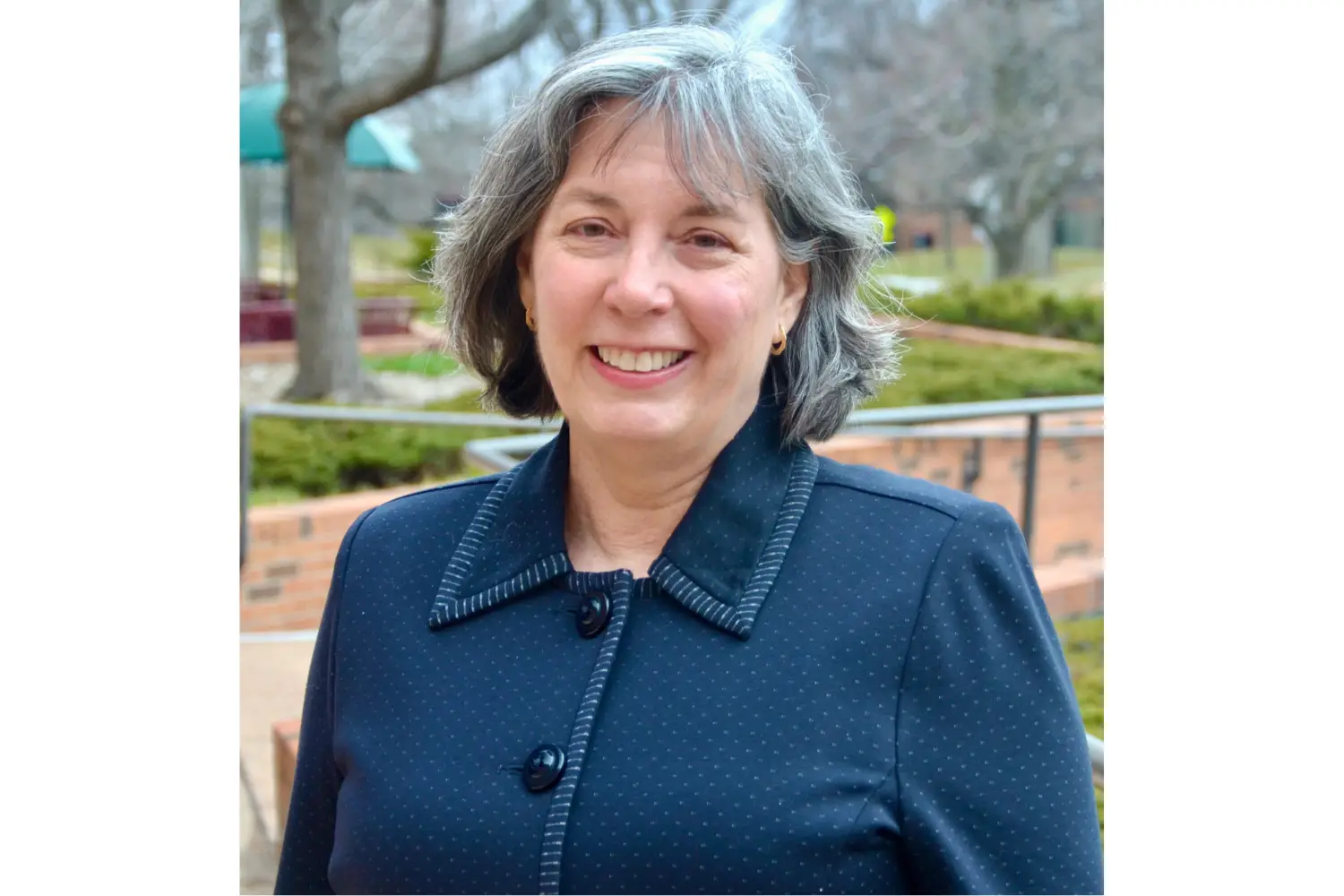
For many people, turning 50 sparks a quiet, but persistent question: What now? For Kate Schaefers, that question became a calling.
After years of watching colleagues and friends struggle to navigate late‑career transitions, she launched the Midlife Academy at the University of Minnesota to help adults rethink work, identity and purpose in the second half of life.
“People are looking for something different than what they see role modeled,” Kate said. “They want meaningful work, whether it’s paid or unpaid. They want new ways of living and working that fit who they are at 50, 60 and beyond.”
Her work is rooted in a belief that midlife isn’t a crisis. Rather, it is an opening.
Why midlife feels different
Kate sees several forces converging as people enter their 50s and 60s. Some of it is developmental, such as Erik Erikson’s idea of generativity, or the natural desire to contribute and give back.
Some of it is practical. Workplaces have changed. For example, careers are less linear and technology keeps reshaping job demands. For some seasoned citizens, it is about longevity.
“People look ahead and realize they might be living 30 years beyond what used to be called retirement,” she said. “A 30‑year vacation doesn’t fit how most people see themselves.”
Instead, adults want flexibility, balance and work that aligns with their values. They want to keep learning and stay engaged, but they often lack a roadmap.
That’s where the Midlife Academy steps in.
A community for reinvention
Kate and her colleagues designed the program around cohorts because they believe transformation happens in conversation. Participants read, reflect and explore their values, but the real magic comes from being seen by others.
“People can hold a mirror up to us and recognize things we don’t always see ourselves,” she said.
The cohort also becomes a powerful network. Someone exploring a new idea often discovers that another participant knows someone who can help. Kate compares it to the “six degrees of Kevin Bacon,” in which everyone on earth is only six connections away from the famous actor. But, Kate is serious about the value of connection.
“A lot of opportunities come from people we know or people they know,” she said. “It opens doors we didn’t even know existed.”
Today, Kate and her cohorts at other universities have developed The Nexel Collaborative because they believe higher education should embrace students at every age. That includes not only “fresh out of high school” graduates, but also individuals in midlife and beyond.
The organization provides networking opportunities and resources promoting the successful development of college-level programs specifically for adults. The goal is to help them transition and thrive in the next stages in their long life journey. More information can be found at www.thenexel.org.
Dreams deferred, dreams revived
Many adults carry quiet longings from earlier in life, such as interests they set aside for practicality. Kate sees midlife as a chance to revisit those dreams.
“Those later years open up more possibilities,” she said. “Maybe you don’t have the same pressures you had in your 30s and 40s. Maybe you have more flexibility.”
She’s quick to acknowledge that not everyone enters midlife with financial security. Many boomers rely solely on Social Security and many Gen Xers lack pensions. But, even when work remains necessary, it doesn’t have to look the same.
“Work can be part of the picture without being the whole picture,” she said.
Purpose with a Big P and a little p
Kate takes a gentle approach to purpose. She rejects the idea that people must find one grand, singular calling. Instead, she talks about “Big P” and “little p” purpose.
The Big P is directional as in a desire to make a difference. The little p is how you show up each day.
“Purpose doesn’t have to be this big, daunting thing,” she said. “It can be small. It can be how you spend your time, connect with others and how you feel aligned with what you’re doing.”
Meaning, she adds, is often found in the moment. Doing things like reading to a child, helping a neighbor or enjoying a meaningful conversation are all small acts which reflect a deeper purpose.
Lessons from a joyful elder
Kate’s own view of aging was shaped by an uncle she and her husband cared for late in his life. He lived to 95 and approached every stage with curiosity and humor. When he turned 88, he delighted in telling people he was “infinity squared.”
“He always had work to do,” she said. “He kept growing, kept connecting and kept finding joy.”
Watching him age with resilience and playfulness gave Kate a hopeful model for her own midlife years.
“My 40s were hard,” she admitted. “But, in my 50s, I felt like I was coming into my own. I was finding my community and doing the work I really wanted to do.”
Why people get stuck
Kate sees internal and external barriers that keep people from moving forward. Externally, careers can trap people in identities that feel hard to leave. Internally, fear and uncertainty can keep people from taking risks.
“We wait too long to make changes,” she said. “That’s why we feel stuck. We feel like we have to live up to the expectations of others.”
She encourages people to take small steps, like doing what researcher Herminia Ibarra calls “crafting experiments.” Try something, volunteer, shadow someone, take a class or enjoy a conversation.
“You may find out you’re really bad at something,” she said with a smile. “But, who cares? That’s learning too.”
The power of curiosity
If Kate could give mid-lifers one mindset, it would be curiosity.
“I wonder if this might be a good fit. I wonder what it would be like to try this. I wonder what it’s like for people working in this field,” she said. “It’s a gentle way of approaching something new.”
Curiosity removes pressure and invites exploration. It makes reinvention feel possible.
Finding your people
When someone feels stuck, Kate’s first advice is to stop thinking alone. Instead, talk to others who are navigating similar transitions and say things out loud, then let people reflect back what they hear.
“Sometimes we have something percolating, but we’re afraid to say it,” she said. “Having people validate it is powerful.”
Accountability also matters. Whether it’s a class, a book club or a group of friends, having to report back on progress keeps people moving.
Why intergenerational connection matters
Kate believes older and younger adults have much to offer each other. She sees it on campus all the time. When people share values and interests, age often fades into the background.
“True friendships develop across generations,” she said. “When you put people in the same room, the energy is contagious.”
She notes that young adults report some of the highest rates of loneliness. Many grew up far from extended family. Having an older adult simply listen can be life changing.
“It’s a win‑win,” she said. “We learn from each other.”
Rethinking retirement
Kate believes the old three‑box model of life – education, work and leisure – no longer fits. People move in and out of work, learning and caregiving. As a result, retirement is no longer a finish line.
“We have this whole new life stage,” she said. “We need new language and new infrastructure to support it.”
Sociologist Phyllis Moen calls it “encore adulthood,” the period after career and family building, but before frailty. Kate sees it as a time of possibility.
“Longevity has given us this gift,” she said. “And it’s coming at the prime of our lives.”
What the Midlife Academy offers
The Midlife Academy is still young, but its early programs are already resonating. The flagship course, Cultivating Purpose, runs eight weeks and helps people clarify their values and direction.
A second course, Next Chapter Reset, focuses on building momentum and moving forward.
In both courses, participants bond quickly. In fact, the first cohort has already held two reunions.
“We’re offering shorter experiences so people can start the process while staying in their careers,” Kate said. “It’s flexible, supportive and provides a sense of community.”
Future courses may explore health and wellness, the empty nest, post‑caregiving identity and other midlife transitions.
Kate also hosts the Midlife Academy podcast, where she interviews experts on burnout, purpose, career shifts and more.
The joy of midlife
If there’s one message Kate wishes more people understood, it’s that midlife is full of joy.
“Most people don’t have a crisis at midlife,” she said. “It’s a time of reinvention and possibility. The best is yet to be.”
She believes whenever adults over 50 enter this stage, they do so with something invaluable – their wisdom.
“And that,” she said, “is a powerful place to begin.”
For more information
People can connect with Kate on these platforms:
- Midlife Academy website = midlife.umn.edu
- Personal website = www.kateschaefers.com
- LinkedIn = www.linkedin.com/in/kateschaefers
The Midlife Academy podcast can be found on iTunes, Spotify and YouTube.