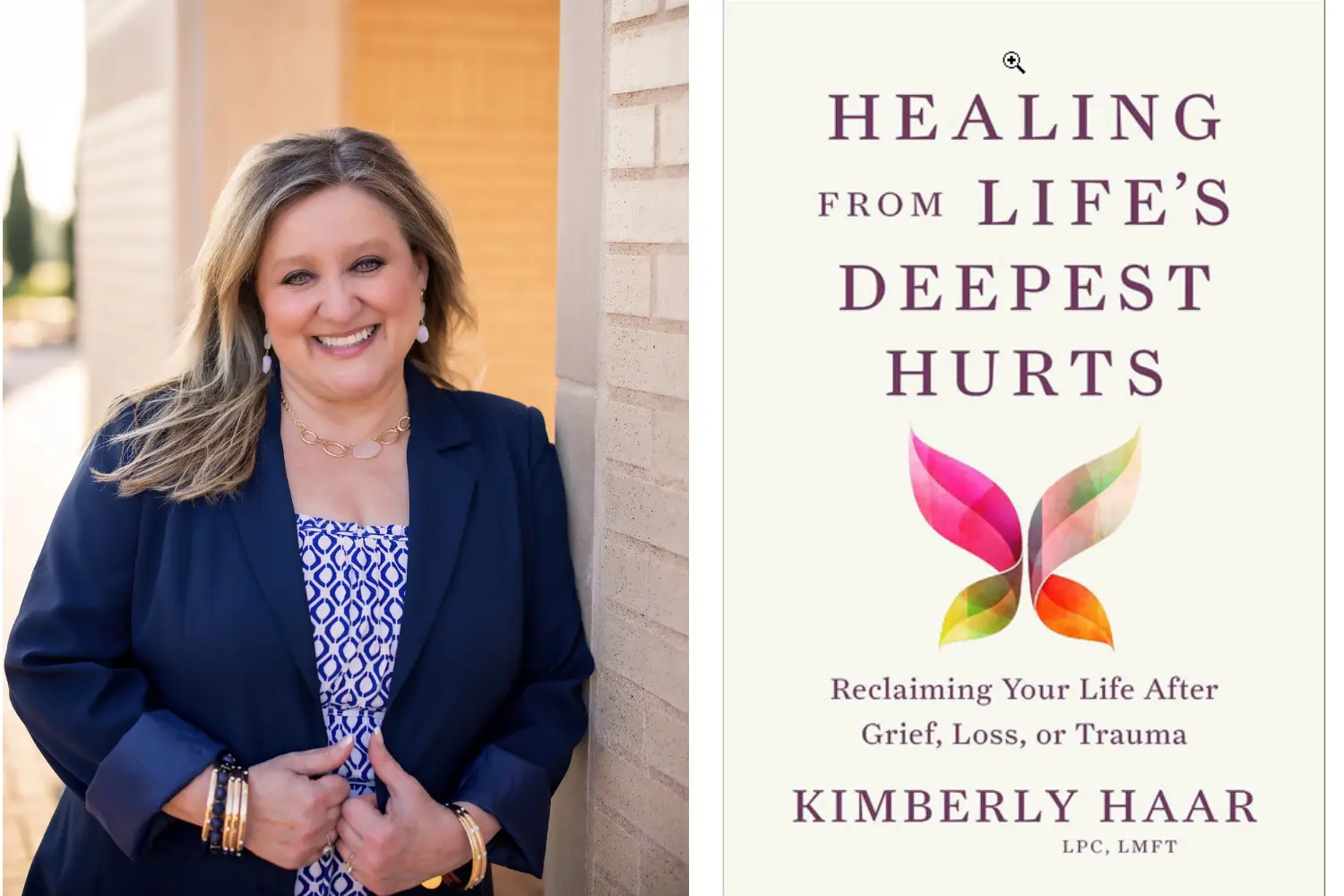
Shortly after Kimberly Haar turned 51, she had every reason to believe life was finally turning a corner. Her children had moved out, she was ready to start dating again, and a stirring in her heart told her this would be the year she got remarried.
She met Andrew, an engineer, and their connection was immediate. Within a month, they were talking seriously about a future together.
“I asked him if he’d fight for me,” Kimberly recalled. “He said, ‘Of course I would,’ and when I asked why, he told me, ‘Because you’re worth it.’”
Neither of them knew that within 24 hours, Andrew would be fighting for his life.
Kimberly’s ex-husband, unable to accept that their marriage was over, broke into her home in the middle of the night. For four hours, he assaulted her and held Kimberly captive. He then forced her into a car, claiming she would have to watch him kill Andrew as punishment for “ruining his life.”
Miraculously, Kimberly managed to escape and call for help. Police rushed to Andrew’s home, but not before he had been shot 10 times through his front door. Against all odds, Andrew survived.
Finding God in the trauma
As devastating as the experience was, Kimberly found herself unusually calm in the moment. She credits that to her background as a licensed therapist.
“I really coached myself through it,” she said. “Even while it was happening, I kept saying, ‘Stay calm. Pay attention. You can fall apart later. Just stay alive.’”
Kimberly had been a counselor for nearly a decade at that point, specializing in family systems and trauma recovery. She returned to school in her late 30s while raising four children, determined to become the kind of therapist she once needed.
Now, she would put every ounce of that training to use for herself.
She sought counseling immediately and drew deeply from her Christian faith. As she began to grieve, worship music became her lifeline. In a borrowed house with a pergola in the backyard, she spent hours in quiet solitude, allowing herself to weep, journal and slowly begin to heal.
“I remember praying, ‘Lord, I don’t even have words. I just need you to sing over me,’” she said. “And I believe he did.”
Psalm 23 became especially meaningful during that season.
“The Bible doesn’t promise that nothing bad will happen to us,” Kimberly explained. “It says we won’t walk through it alone. And I felt that. There was one moment where I physically sensed God’s presence in the room. He was sad about what was happening, but he was there.”
The long road of forgiveness
Forgiveness was not a one-time decision, Kimberly said. It was a daily discipline and, sometimes, even hourly. And it extended not just to her ex-husband, but also to herself, to God and to others who had made well-intentioned, but hurtful comments during her divorce.
“I had to forgive myself for getting divorced in the first place,” she said. “Even though there was infidelity, and I knew I had done the right thing, I still struggled with guilt.”
She also had to forgive the expectations she had placed on God.
“I expected God to protect me in a certain way,” she said. “When that didn’t happen, I had to release those expectations and trust that his goodness hadn’t changed.”
Perhaps the most difficult aspect was learning to let go of resentment and the illusion of control. As a therapist, Kimberly had long taught others the power of forgiveness. Now she was living it.
“Unforgiveness is like an umbilical cord,” she explained. “It ties you to the person or the event that hurt you, and it drains the life out of you. The only way to be free is to cut that cord.”
A surprising reconciliation
As Andrew recovered from his injuries, Kimberly was uncertain whether they would reunite. His adult children initially encouraged him to distance himself from her, thinking it would protect him from further harm. Kimberly honored their wishes. She was heartbroken, but respectful.
Five weeks later, she received a simple message from Andrew saying, “Hey, I’m alive.”
That message began a new chapter. After a few brief exchanges, she visited him in the hospital. He was hesitant, unsure if they could move forward after such trauma. But Kimberly reminded him, “You will never meet another woman like me.”
Four months later, they were married.
“We’ve had eight of the most wonderful years together,” she said.
Turning pain into purpose
Today, Kimberly draws from her personal experience to enhance her professional work. Her counseling practice is based in Tulsa, Okla., where she sees clients in person and via telehealth. However, at the moment, she is currently taking a break from accepting new clients due to her growing speaking and writing schedule.
She recently released a book, “Healing from Life’s Deepest Hurts,” which combines her personal story with practical therapeutic tools to help others navigate grief, loss and trauma. The first half of the book outlines her journey. The second half offers tools she uses in therapy, including journaling, community support, gratitude, self-talk and music.
“My goal wasn’t to write a book about pain,” she said. “It was to write about healing and hope.”
She emphasizes that trauma doesn’t have to be dramatic to be real. Emotional wounds, broken relationships and silent suffering can be just as damaging as violent events.
“Pain is pain,” Kimberly said. “And no one should have to walk through it alone.”
Living with hope and intention
Kimberly’s post-50 life has been filled with deeper meaning and renewed purpose. She no longer lives in survival mode. Instead, she embraces each day with gratitude, peace and joy.
“I decided early on that this experience would not make me bitter,” she said. “It would make me better.”
She brings that same resolve to her work with clients. Whether she’s guiding someone through divorce, betrayal, grief or anxiety, Kimberly draws from her own scars – not just her schooling – to offer empathy, wisdom and strength.
“I told my daughter in the emergency room, ‘Promise me you won’t let this make you bitter,’” Kimberly said. “That’s the story I want to live. Not just that I survived something terrible, but that I healed and others can, too.”
Helping others move forward
Kimberly continues to speak at events, churches and retreats. Her message is always the same: healing is possible, forgiveness is powerful, and your life can have meaning even after unimaginable loss.
She believes God can use anyone’s story for good, especially when they are willing to bring their brokenness into the light.
“There’s a time to weep, and there’s a time to dance,” she said. “I want people to know that even if they’re in the valley, they won’t be there forever. Joy is still ahead.”
For more information
People can connect with Kimberly on these platforms:
- Website = www.kimberlyhaar.com
- Facebook = www.facebook.com/KimberlyJHaar
- Instagram = www.instagram.com/kimberly.haar
- LinkedIn = www.linkedin.com/in/kimhaar
Kimberly’s book, “Healing from Life’s Deepest Hurts,” is available on Amazon and in other bookstores.